
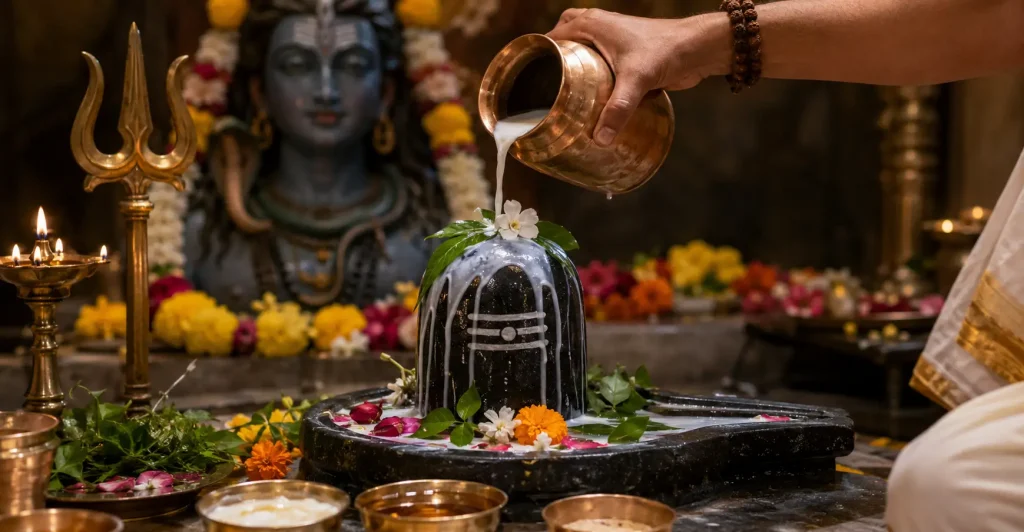
Walk past any Shiva temple during Shravan month, and you’ll likely see priests pouring milk, water, and honey over the Shivling while chanting Vedic hymns. This naturally raises a common question: why is Rudrabhishek Puja done in the first place? It isn’t just ritual for tradition’s sake. Rooted in the belief that Lord Shiva’s fierce Rudra form can dissolve obstacles, illness, and negativity, this ancient ceremony blends devotion with deep symbolism. Whether you’re performing it for the first time or simply exploring its purpose, understanding its meaning, benefits, and process can help you approach it with genuine intention and clarity.
What Is Rudrabhishek Puja?
Rudrabhishek is a sacred ablution ceremony dedicated to Lord Shiva, performed by pouring various substances — water, milk, honey, ghee, curd, and sugarcane juice — over the Shivling while reciting the Rudra mantras from the Yajurveda. The word “Rudra” refers to the fierce, powerful aspect of Shiva, while “Abhishek” means ritual bathing or anointing.
Unlike a simple prayer, this puja is a structured Vedic ceremony, often conducted by trained priests (pandits) who chant the Rudri Path — a set of hymns from the Krishna Yajurveda that praise Shiva’s various forms and powers.
The Core Belief Behind the Ritual
At its heart, the puja is based on a simple idea: Shiva represents transformation, and by ritually “bathing” him, devotees symbolically cleanse their own lives of negativity, fear, and misfortune. This is really the foundation of why is Rudrabhishek Puja done — it’s less about the physical act and more about the inner transformation it’s believed to trigger.
Why Is Rudrabhishek Puja Done? The Core Reasons
So, why is Rudrabhishek Puja done so widely across India, especially during Mahashivratri and the month of Shravan? There are several layered reasons, both spiritual and practical.
1. To Seek Blessings for Health and Well-being
One of the most common reasons is health. Families facing chronic illness, recovery struggles, or medical uncertainty often turn to this puja, believing Shiva’s grace can restore balance to the body and mind. This is precisely why is Rudrabhishek Puja done before major surgeries or during prolonged health issues in many Hindu households.
2. To Remove Obstacles and Negative Energy
Life doesn’t always move in a straight line. Career setbacks, relationship troubles, or a persistent string of bad luck often push people toward this ritual. It’s widely believed that the vibrations created by the Rudra mantras help clear stagnant or negative energy from a person’s environment and mind.
3. To Invite Peace, Prosperity, and Success
Many devotees perform this puja before starting a new business, buying a house, or making a major life decision. The idea is that Shiva’s calm, meditative energy combined with the fierce protective power of Rudra creates a balanced foundation for growth.
4. To Fulfil Vows and Express Gratitude
Sometimes it’s simply about gratitude. If someone made a vow to Shiva during a difficult time and things worked out, performing Rudrabhishek is a way of honoring that promise.
Benefits of Rudrabhishek Puja
The benefits of Rudrabhishek Puja are often described across three dimensions — physical, mental, and spiritual.
- Physical benefits: Devotees believe it aids recovery from illness and boosts overall vitality.
- Mental benefits: The rhythmic chanting has a calming effect, often compared to sound therapy or meditation.
- Spiritual benefits of Rudrabhishek Puja: Many practitioners describe a sense of inner clarity, reduced anxiety, and a feeling of protection after the ceremony.
Rudrabhishek Puja for Health and Prosperity
This is one of the most requested versions of the puja. Families experiencing financial stagnation or health concerns often combine both intentions into a single ceremony, offering specific dravyas (substances) like honey for sweetness in life and milk for purity and nourishment.
Rudrabhishek Puja for Peace and Happiness
For those dealing with domestic conflict, stress, or emotional turmoil, this variation focuses on chanting the Maha Mrityunjaya mantra alongside the standard Rudri Path, believed to bring emotional stability.
Rudrabhishek Puja for Success
Students before exams, professionals before interviews, and entrepreneurs before launches often perform a focused version of this puja, requesting clarity of thought and confidence.
Rudrabhishek Puja for Removing Negative Energy
If a home feels “heavy” or a person feels persistently unlucky, this specific intention-driven puja is performed with extra emphasis on Bilva (bael) leaves and Bhasma (sacred ash), both strongly associated with Shiva’s protective energy.
Importance and Significance of Rudrabhishek Puja
The importance of Rudrabhishek Puja lies in its dual nature — it honors Shiva as both destroyer and protector. In Hindu philosophy, destruction isn’t inherently negative; it’s necessary for renewal. So when devotees perform this ritual, they’re essentially asking Shiva to destroy what no longer serves them (bad habits, fear, illness) so that something better can take root.
The Rudrabhishek Puja significance also extends to community and family bonding. It’s often performed as a group activity during festivals, strengthening not just individual faith but shared cultural identity.
Key Components of the Puja
A traditional Rudrabhishek ceremony typically includes:
- Sankalp (Intention setting): The devotee states their purpose for performing the puja.
- Ganesh Puja: Lord Ganesha is worshipped first to remove obstacles before the main ritual begins.
- Rudri Path Chanting: Priests recite eleven Anuvakas (chapters) from the Rudra hymn, often repeated multiple times (Ekadash Rudri, Laghurudra, etc.)
- Abhishek Dravyas: Substances like water, milk, curd, ghee, honey, sugarcane juice, and sandalwood paste are poured over the Shivling in sequence.
- Aarti and Prasad Distribution: The ceremony concludes with aarti and distribution of blessed offerings.
Read More:
- Shiv Pooja Vidhi in Sawan Month for Beginners with Easy Rituals
- Different Types of Rudrabhishek Puja and Their Spiritual Benefits
- Rudrabhishek Puja in Sawan Month for Health, Wealth, and Prosperity
- How to Do Shiv Puja on Monday at Home: A Step-by-Step Guide
- Why Rudrabhishek Puja in Sawan Month Is Considered Most Powerful
Step-by-Step Guide to Performing Rudrabhishek Puja
- Choose an auspicious day — Monday, Mahashivratri, or any day during Shravan month is considered ideal.
- Clean the puja area and set up a Shivling or Shiva idol.
- Begin with Ganesh Vandana to ensure a smooth ceremony.
- State your Sankalp clearly, mentioning your name, gotra, and purpose.
- Start the abhishek by pouring water first, followed by milk, curd, honey, ghee, and sugarcane juice, one at a time.
- Chant the Rudri Path or have a qualified priest recite it.
- Offer Bilva leaves, flowers, and Bhasma.
- Perform aarti and conclude with prayers for the family’s well-being.
- Distribute prasad to all present.