
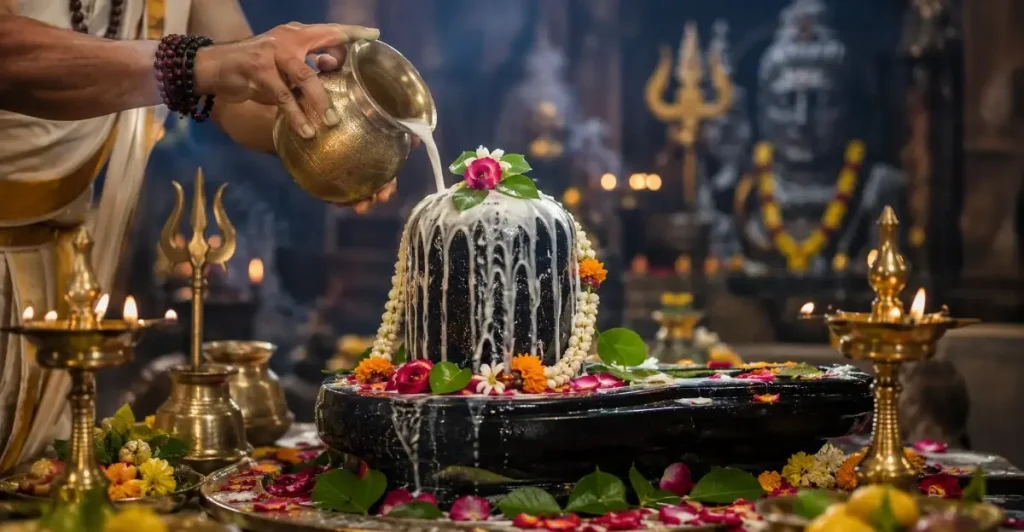
Rudrabhishek Puja in Sawan Month is regarded as one of the most sacred and spiritually rewarding rituals dedicated to Lord Shiva. The holy month of Sawan, also known as Shravan, is believed to be especially dear to Lord Shiva, making every prayer and offering during this period more meaningful. Devotees from across India observe fasts, visit Shiva temples, chant Vedic mantras, and perform Rudrabhishek to seek blessings for health, prosperity, peace, and spiritual growth. According to ancient scriptures, worshipping Lord Shiva during Sawan helps remove negative energies and strengthens inner faith. Whether performed at home or in a temple under the guidance of experienced priests, this divine ritual is believed to bring positive transformation and divine grace into one’s life.
What Is Rudrabhishek Puja?
Rudrabhishek Puja is a sacred Vedic ritual in which Lord Shiva’s Shivling is ceremonially bathed with holy offerings while chanting powerful hymns from the Rudram section of the Yajurveda.
The word is made up of two Sanskrit terms:
- Rudra – One of the most powerful forms of Lord Shiva.
- Abhishek – The sacred act of bathing the deity with holy substances.
The ritual generally includes offerings such as:
- Pure water
- Gangajal
- Milk
- Curd
- Honey
- Ghee
- Sugar
- Bilva (Bel) leaves
- White flowers
- Sandalwood paste
- Fruits and seasonal offerings
Each offering represents purity, gratitude, devotion, and surrender to Lord Shiva.
Why Is Sawan Month So Special for Lord Shiva?
The Spiritual Importance of Sawan
The month of Sawan holds immense importance in Hindu traditions. It is believed that during the cosmic event known as Samudra Manthan, Lord Shiva consumed the deadly poison Halahala to save the universe. Devotees honour this supreme sacrifice by offering water, milk, and prayers throughout Sawan.
Another belief is that Goddess Parvati observed intense penance during Sawan to attain Lord Shiva as her husband. Therefore, this month is considered especially auspicious for devotion, marriage-related prayers, and family well-being.
This is why Rudrabhishek in Sawan carries exceptional spiritual significance.
Why Rudrabhishek Puja in Sawan Month Is Considered Most Powerful
Increased Divine Energy
According to Hindu beliefs, spiritual vibrations are believed to be stronger during Sawan. Worship performed with sincere devotion during this period is considered highly beneficial for receiving Lord Shiva’s blessings.
Powerful Mantra Vibrations
During Sawan Rudrabhishek Puja, priests chant sacred Vedic mantras such as Shri Rudram, Chamakam, and the Mahamrityunjaya Mantra. These ancient chants are believed to create a spiritually uplifting atmosphere and inspire peace of mind.
Cleansing of Negative Energy
Many devotees believe that Rudrabhishek Puja during Sawan helps remove negativity from the home and brings emotional balance, confidence, and positive thinking.
Fulfilment of Wishes
People perform this sacred ritual for various intentions, including:
- Good health
- Career success
- Financial stability
- Marriage blessings
- Family harmony
- Peace of mind
- Spiritual progress
Spiritual Benefits of Sawan Month Rudrabhishek
Performing Sawan Month Rudrabhishek is believed to offer several spiritual and personal benefits.
Peace and Mental Strength
Regular worship of Lord Shiva encourages calmness and emotional stability. Devotees often experience greater patience and clarity in daily life.
Family Prosperity
Many families perform Lord Shiva Rudrabhishek Puja together to seek unity, happiness, and prosperity for every member of the household.
Removal of Obstacles
Traditional beliefs suggest that sincere worship during Sawan helps devotees overcome challenges by strengthening their determination and faith.
Spiritual Growth
Rudrabhishek is not only about fulfilling material desires but also about developing devotion, humility, and self-awareness.
Important Ingredients Used in Rudrabhishek
Each offering carries symbolic meaning.
Water
Represents purity and surrender.
Milk
Symbolises nourishment and peace.
Honey
Represents sweetness in relationships and speech.
Ghee
Associated with prosperity and divine blessings.
Bilva Leaves
Among the most beloved offerings to Lord Shiva and considered highly auspicious.
Sandalwood Paste
Represents purity, fragrance, and inner calm.
White Flowers
Symbolise simplicity, devotion, and spiritual purity.
Step-by-Step Process of Shiva Abhishek in Sawan
Although traditions may vary slightly across regions, the ritual usually follows these steps.
Step 1: Purification
Clean the worship area and take a bath before beginning the ritual.
Step 2: Sankalp
Take a sacred vow while remembering your purpose for performing the puja.
Step 3: Invocation
Invoke Lord Ganesha and other deities before beginning Lord Shiva’s worship.
Step 4: Sacred Abhishek
Perform Shiva Abhishek in Sawan by offering water, milk, curd, honey, ghee, and Gangajal over the Shivling while chanting “Om Namah Shivaya.”
Step 5: Bilva Leaf Offering
Offer fresh Bilva leaves with devotion.
Step 6: Chanting
Recite Shri Rudram, Mahamrityunjaya Mantra, or Shiva Chalisa according to your ability.
Step 7: Aarti
Perform Shiva Aarti and offer fruits and prasad.
Who Should Perform Rudra Abhishek Puja?
Almost anyone can perform Rudra Abhishek Puja with sincere devotion.
It is especially recommended for people seeking:
- Better health
- Peace in married life
- Career growth
- Business success
- Relief from mental stress
- Spiritual development
- Protection from negative influences
The ritual can be performed individually, with family members, or by experienced Vedic priests according to traditional practices.
Common Mistakes to Avoid During Shiva Rudrabhishek
Even though Lord Shiva is known as Bholenath—the compassionate and easily pleased deity—maintaining sincerity and following traditional practices can make the worship more meaningful.
Some common mistakes include:
- Performing the ritual without proper cleanliness.
- Using damaged or dry Bilva leaves.
- Chanting mantras carelessly without attention.
- Treating the ritual as a formality rather than an act of devotion.
- Ignoring the importance of faith and concentration.
- Using impure or stale offerings.
- Rushing through the ceremony instead of worshipping with patience.
Expert Tips for a More Meaningful Rudrabhishek Ceremony
Choose an Auspicious Time
Mondays in Sawan and early morning hours are traditionally considered highly favourable for performing the Rudrabhishek Ceremony.
Chant with Devotion
Even if you cannot recite lengthy Vedic hymns, sincerely chanting “Om Namah Shivaya” throughout the ritual is considered spiritually uplifting.
Maintain a Pure Mind
Approach the worship with gratitude, humility, and a peaceful mindset. Devotion is valued more than elaborate arrangements.
Seek Guidance When Needed
If you are unfamiliar with Vedic rituals, performing the ceremony under the guidance of knowledgeable priests can help preserve traditional practices and ensure the ritual is conducted respectfully.
The Importance of Devotion Over Rituals
While the rituals of Rudrabhishek follow ancient Vedic traditions, the true essence of worship lies in devotion. Hindu scriptures repeatedly emphasize that Lord Shiva is easily pleased by sincere prayers offered with a pure heart. Even a simple offering of clean water and Bilva leaves, accompanied by genuine faith, is considered spiritually rewarding.
Many devotees who perform Rudrabhishek every Sawan believe the practice brings them inner peace, emotional balance, and renewed confidence. Although every person’s experience is unique, the ritual encourages discipline, mindfulness, and gratitude—qualities that positively influence daily life.
Why Millions Perform Sawan Shiva Puja Every Year
Across India, temples dedicated to Lord Shiva witness a significant increase in devotees during the month of Sawan. Mondays, known as Sawan Somvar, are considered especially auspicious.
People perform Sawan Shiva Puja for many reasons:
- To seek blessings for a healthy and prosperous life.
- To pray for harmony within the family.
- To remove obstacles from career or business.
- To strengthen spiritual discipline.
- To express gratitude to Lord Shiva.
- To seek mental peace during difficult times.
- To begin new ventures with divine blessings.
The month also inspires many people to adopt positive habits such as fasting, meditation, charity, and regular chanting of “Om Namah Shivaya.”
Can Rudrabhishek Be Performed at Home?
Yes. Shiva Rudrabhishek can be performed at home if proper preparations are made and the rituals are observed respectfully. Many families invite experienced Vedic priests to conduct the puja according to traditional procedures.
If you are performing the ritual yourself:
- Clean the worship area thoroughly.
- Place a Shivling on a clean altar.
- Arrange all puja materials beforehand.
- Wear clean, traditional clothing.
- Chant Shiva mantras with sincerity.
- Offer the sacred ingredients one by one.
- Conclude with Aarti and distribute Prasad.
If the complete Vedic procedure is difficult to follow, even a simple worship with water, Bilva leaves, flowers, and heartfelt prayers is considered meaningful.
Spiritual Lessons from Rudrabhishek
Beyond its religious importance, Rudrabhishek teaches timeless life values.
Humility
Pouring water over the Shivling reminds devotees to surrender pride and ego.
Gratitude
Every offering symbolizes appreciation for life’s blessings.
Self-Discipline
Observing fasts, waking early, and performing prayers regularly cultivate discipline.
Compassion
Lord Shiva is known for accepting every devotee equally. His worship inspires kindness, forgiveness, and compassion toward others.
Inner Transformation
Regular worship encourages self-reflection, helping devotees replace negative thoughts with faith, patience, and positivity.
Read More: Rudra Abhishek Pooja Benefits for Business Growth and Professional Success
FAQs: Rudrabhishek Puja in Sawan Month
1. Why is Rudrabhishek considered most powerful during Sawan?
Sawan is regarded as the holiest month dedicated to Lord Shiva. According to Hindu traditions, prayers, fasting, mantra chanting, and Rudrabhishek performed during this month are believed to carry greater spiritual significance because devotees focus intensely on Shiva worship.
2. Can Rudrabhishek Puja be performed at home?
Yes. The puja can be performed at home with proper preparation, clean surroundings, and sincere devotion. Many families invite qualified priests to conduct the ritual according to Vedic traditions, while others perform a simple Abhishek with water, milk, Bilva leaves, and Shiva mantras.
3. Which day is best for Rudrabhishek in Sawan?
Mondays during Sawan, known as Sawan Somvar, are traditionally considered the most auspicious days for Rudrabhishek. Pradosh Vrat and Mahashivratri are also regarded as highly favorable occasions for Lord Shiva worship.
4. What items are required for Rudrabhishek?
The essential offerings include Gangajal, clean water, milk, curd, honey, ghee, sugar, Bilva leaves, sandalwood paste, white flowers, fruits, incense, lamps, and sacred mantras such as Om Namah Shivaya and Mahamrityunjaya Mantra.
5. Who can perform Rudrabhishek?
Anyone with genuine faith can perform Rudrabhishek regardless of age or profession. Families, individuals, and devotees often participate together to pray for health, prosperity, peace, spiritual growth, and overall well-being.
6. Is fasting necessary before Rudrabhishek?
Fasting is a personal spiritual practice and is not compulsory. Many devotees choose to observe a fast on Mondays during Sawan, while others focus on maintaining purity, discipline, and devotion throughout the worship.
7. What are the benefits of Lord Shiva Rudrabhishek Puja?
Devotees believe the puja helps bring inner peace, removes negativity, strengthens faith, promotes family harmony, and supports spiritual development. It also encourages positive thinking, gratitude, and emotional balance in everyday life.
8. Can women perform Rudrabhishek?
Yes. Women can perform Rudrabhishek with devotion while following the customs and traditions observed in their family or community. Practices may differ across regions, so many devotees also seek guidance from knowledgeable priests.
9. How long does a Rudrabhishek Ceremony usually take?
The duration depends on the type of ritual. A simple Rudrabhishek generally takes 45–60 minutes, while elaborate Vedic ceremonies with complete Rudram chanting may take two to three hours or longer.
10. How often should Rudrabhishek be performed?
There is no fixed rule. Many devotees perform it every Monday during Sawan, while others arrange the puja on Mahashivratri, birthdays, anniversaries, or whenever they wish to seek Lord Shiva’s blessings.
Final Thought: Rudrabhishek Puja in Sawan Month
Rudrabhishek Puja in Sawan Month is much more than a religious ritual—it is a sacred opportunity to deepen your connection with Lord Shiva through faith, devotion, and disciplined worship. From promoting inner peace and spiritual growth to inspiring gratitude and positive living, this ancient Vedic ceremony continues to guide millions of devotees every year. If you wish to perform an authentic Rudrabhishek with experienced Vedic priests, Puja Paath Hawan offers traditional puja services conducted according to sacred rituals. Visit https://pujapaathhawan.com/ to learn more, book your puja, and receive Lord Shiva’s divine blessings during the holy month of Sawan.