
So you’ve picked up the Bhagavad Gita, or maybe you’re just starting to read about it, and one question keeps popping up — how many chapters are there in Shrimad Bhagwat Geeta? It’s a fair thing to wonder, especially if you’re new to this text and want to know what you’re getting into before you dive in. The short answer is 18 chapters, but honestly, that number alone doesn’t tell you much.
What matters more is what happens inside those chapters — the questions Arjuna asks, the doubts he carries, and how Krishna slowly, patiently, walks him through them. Once you understand the shape of the whole conversation, the Shrimad Bhagavad Gita path starts to feel less like a religious obligation and more like something you can actually sit with and learn from.
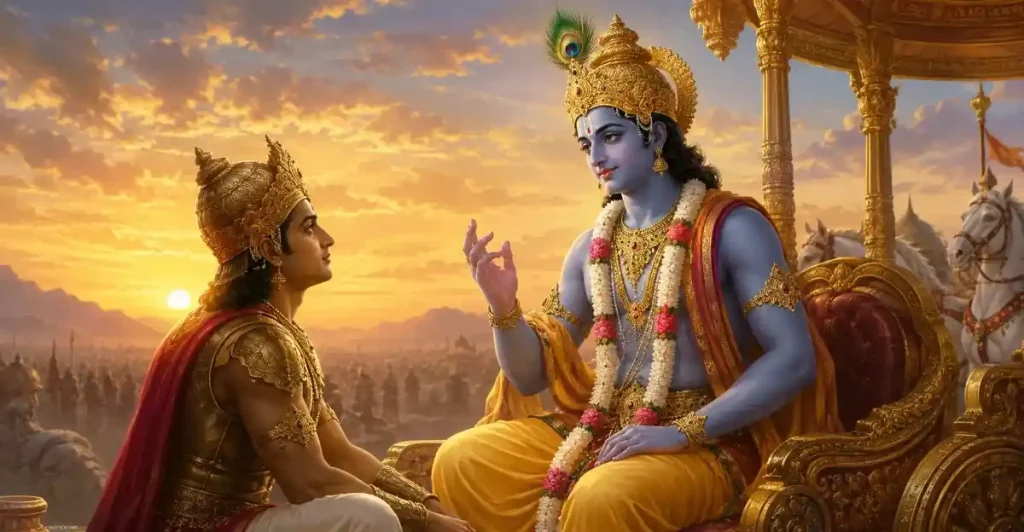
What Is Shrimad Bhagwat Geeta?
The Shrimad Bhagwat Geeta, often simply called the Bhagavad Gita, is a 700-verse scripture that forms part of the epic Mahabharata. It is presented as a conversation between Lord Krishna and the warrior Arjuna, who is torn between duty and personal grief just before a great war begins. Through this dialogue, Krishna explains the nature of the soul, the path of righteous action, devotion, and ultimate liberation.
For millions of readers across generations, this text is not just religious literature — it is a practical guide for living with purpose. That is exactly why so many people search for how many chapters are there in Shrimad Bhagwat Geeta before they begin reading, so they know what to expect from the journey ahead.
How Many Chapters Are There in Shrimad Bhagwat Geeta?
To answer directly: there are 18 chapters in the Bhagavad Gita, also called adhyayas in Sanskrit. Each adhyaya focuses on a distinct theme, ranging from sorrow and confusion in the opening chapter to complete surrender and liberation in the final one. Understanding how many chapters are there in Shrimad Bhagwat Geeta is the first step, but knowing what happens in each one is where the real value begins.
The total chapters in Bhagavad Gita are structured almost like a staircase. Each chapter builds upon the previous one, gradually moving the reader from confusion toward clarity. This is why scholars often say the Gita should ideally be read in sequence rather than picking random chapters.
Why 18 Chapters Specifically?
The number 18 holds spiritual significance in Hindu tradition. The Mahabharata itself has 18 parvas (sections), the war lasted 18 days, and the Bhagavad Gita has 18 chapters. This symmetry is not accidental — it reflects a deeper philosophical design where every element of the epic mirrors completeness and cyclical balance.
Bhagavad Gita 18 Chapters With Names
Here is the complete Bhagavad Gita chapter list, along with the English meaning of each title. This list answers not just how many adhyayas are in Bhagavad Gita, but also what each one is called and represents.
- Arjuna Vishada Yoga – The Yoga of Arjuna’s Grief
- Sankhya Yoga – The Yoga of Knowledge
- Karma Yoga – The Yoga of Action
- Jnana Karma Sanyasa Yoga – The Yoga of Knowledge and Renunciation of Action
- Karma Sanyasa Yoga – The Yoga of Renunciation
- Dhyana Yoga – The Yoga of Meditation
- Jnana Vijnana Yoga – The Yoga of Knowledge and Wisdom
- Akshara Brahma Yoga – The Yoga of the Imperishable Absolute
- Raja Vidya Raja Guhya Yoga – The Yoga of Royal Knowledge and Royal Mystery
- Vibhuti Yoga – The Yoga of Divine Glories
- Vishwarupa Darshana Yoga – The Yoga of the Vision of the Universal Form
- Bhakti Yoga – The Yoga of Devotion
- Kshetra Kshetrajna Vibhaga Yoga – The Yoga of the Field and the Knower of the Field
- Gunatraya Vibhaga Yoga – The Yoga of the Three Modes of Nature
- Purushottama Yoga – The Yoga of the Supreme Divine Personality
- Daivasura Sampad Vibhaga Yoga – The Yoga of Divine and Demoniac Natures
- Shraddhatraya Vibhaga Yoga – The Yoga of the Threefold Faith
- Moksha Sanyasa Yoga – The Yoga of Liberation through Renunciation
This 18 chapters of Bhagavad Gita with names structure is what makes the scripture so systematic. It does not just offer scattered wisdom — it builds a complete philosophical framework.
Shrimad Bhagavad Gita Chapter Wise Summary
Let’s break down the Shrimad Bhagavad Gita chapter wise summary in simple terms so you can understand the flow of ideas without needing prior knowledge of Sanskrit philosophy.
Chapters 1–6: The Path of Self-Realization
The opening section deals with Arjuna’s emotional crisis and Krishna’s initial teachings on the soul, duty, and disciplined action. This part of the Bhagavad Gita adhyay list introduces core ideas like the immortality of the soul and the importance of performing one’s duty without attachment to results.
Chapters 7–12: The Path of Devotion
The middle section shifts toward devotion and divine knowledge. Krishna reveals his cosmic form and explains how sincere devotion, or bhakti, can lead a person toward the divine regardless of their background or status.
Chapters 13–18: The Path of Liberation
The final section of the structure of Bhagavad Gita focuses on self-knowledge, the three modes of material nature, and ultimately, liberation. Chapter 18, the longest chapter, summarizes everything discussed earlier and ends with Krishna urging Arjuna to reflect deeply and choose his own path with full understanding.
This chapter sequence is one reason the text remains relevant today — it moves from personal struggle to universal truth in a logical, digestible order.
Importance of the 18 Chapters in Bhagavad Gita
Understanding the importance of 18 chapters in Bhagavad Gita helps readers appreciate why this text has stayed relevant for thousands of years.
- Each chapter addresses a specific human dilemma — grief, doubt, ego, fear, or attachment.
- The gradual progression makes complex philosophy approachable for beginners.
- Reading chapter by chapter allows for reflection rather than passive consumption.
- The structure supports both scholarly study and daily spiritual practice.
Many readers who explore the meaning of each chapter in Bhagavad Gita find that different chapters resonate at different stages of life. A student may connect more with the chapter on knowledge, while someone facing loss may find comfort in the opening chapters on grief and impermanence.
Step-by-Step Guide to Reading the Bhagavad Gita
If you are new to this scripture, here is a simple approach to reading it meaningfully:
- Start with an overview. Read a short summary of all Bhagavad Gita chapter titles before diving into the verses.
- Read one chapter at a time. Avoid rushing through the complete Bhagavad Gita chapters in a single sitting.
- Reflect after each chapter. Spend a few minutes thinking about how the teachings apply to your life.
- Use a trusted translation. A clear, accurate translation makes a significant difference in comprehension.
- Revisit difficult chapters. Some adhyayas, especially those on the three gunas, may require a second reading.
This method turns the Gita from a religious formality into a genuine learning guide for daily living.
Common Mistakes to Avoid
- Skipping the introduction chapter. Chapter 1 sets the emotional context for everything that follows.
- Reading out of order. The chapters of Gita in order build on one another logically.
- Focusing only on translation, not meaning. Literal translation without reflection often misses the deeper message.
- Treating it purely as religious text. Many find more value approaching it as practical life philosophy.
Expert Tips for Studying the Gita
- Read alongside a commentary from a reputed scholar for added context.
- Maintain a journal to note personal reflections after each chapter.
- Discuss verses with a study group or knowledgeable guide for deeper insight.
- Revisit the text periodically — its meaning often shifts as life experience grows.
FAQs:
1. How many chapters are there in Shrimad Bhagwat Geeta?
There are 18 chapters in total, each covering a distinct spiritual or philosophical theme. Together, they form a complete conversation between Krishna and Arjuna, moving from confusion and grief toward wisdom, devotion, and ultimate liberation.
2. How many verses are there in the Bhagavad Gita?
The Bhagavad Gita contains approximately 700 verses spread across its 18 chapters. The number of verses per chapter varies, with some chapters being significantly longer and more detailed than others.
3. Which is the longest chapter in the Bhagavad Gita?
Chapter 18, Moksha Sanyasa Yoga, is the longest chapter. It serves as a summary of the entire text and concludes with Krishna’s final guidance to Arjuna on making his own informed choice.
4. Which is the shortest chapter in the Bhagavad Gita?
Chapter 15, Purushottama Yoga, is among the shortest chapters. Despite its brevity, it holds significant philosophical weight, discussing the nature of the Supreme Being.
5. Can I read the Bhagavad Gita chapters in any order?
While technically possible, it is best to follow the original chapters of Gita in order, since each chapter builds logically upon the ideas introduced earlier in the text.
6. What is the main message across the 18 chapters?
The core message is about performing one’s duty selflessly, cultivating devotion, and understanding the eternal nature of the soul, ultimately leading toward inner peace and liberation.
7. Is Bhagavad Gita part of the Mahabharata?
Yes, the Bhagavad Gita chapters appear within the Bhishma Parva of the Mahabharata, presented as a dialogue between Krishna and Arjuna right before the Kurukshetra war begins.
8. How long does it take to read all 18 chapters?
Reading the complete Bhagavad Gita chapters with reflection typically takes a few weeks if done mindfully, one chapter at a time, rather than rushing through the entire text quickly.
9. What language was the Bhagavad Gita originally written in?
The original text was composed in Sanskrit. Today, it is available in numerous translations, making the Shrimad Bhagavad Gita path accessible to readers across different languages and cultures.
10. Why is the Bhagavad Gita still relevant today?
Its teachings on duty, purpose, and inner peace address timeless human struggles. This is why the total chapters in Bhagavad Gita continue to guide readers through modern-day challenges and decision-making.