
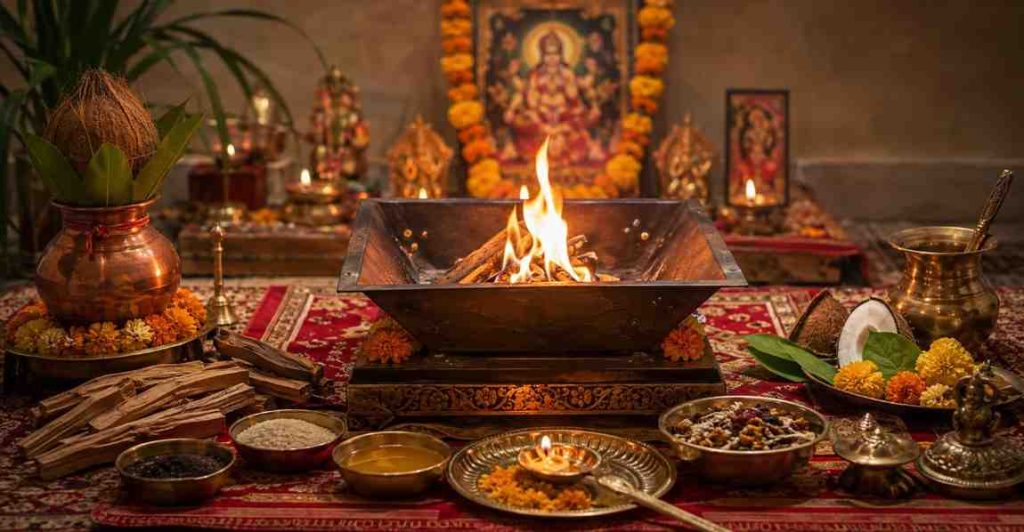
Amavasya, the no-moon night, holds a special place in Hindu tradition as a day for ancestral worship, spiritual cleansing, and inner reflection. Many households choose to perform a havan on this day to remove negative energy, seek blessings for departed souls, and invite positivity into their lives. If you’re wondering how to begin, this guide walks you through the complete Amavasya Havan Vidhi in a simple, practical way that anyone can follow at home, even without a priest. Whether you’re doing this for the first time or want to refine your existing practice, this article covers everything from samagri to mantras to common mistakes.
What Is Amavasya Havan Vidhi?
Amavasya Havan Vidhi refers to the traditional method of performing a fire ritual (havan) specifically on Amavasya, the new moon day. This day is considered auspicious for pitru tarpan (offerings to ancestors), removing doshas, and cleansing the home’s energy. The havan involves invoking sacred fire, offering specific items like ghee, herbs, and grains, while chanting Vedic mantras.
Unlike regular pujas, Amavasya havan carries a unique spiritual significance because the moon’s absence is believed to open a window for connecting with ancestral energies and clearing subtle blockages that accumulate over time.
Why Amavasya Is Considered Special
In Hindu astrology, Amavasya marks the transition point of the lunar cycle. It’s associated with:
- Pitru Paksha rituals and ancestor remembrance
- Clearing accumulated negative energy from the home
- New beginnings, since the moon starts waxing right after
- Strengthening spiritual discipline and mindfulness
Performing Amavasya Havan at Home during this window is thought to amplify the effectiveness of prayers and offerings.
Importance and Benefits of Amavasya Havan
People perform havans for different personal reasons, but the collective benefits associated with this ritual are widely recognized across Indian households.
Spiritual Benefits
- Helps pacify ancestral souls (Pitru Dosh Nivaran)
- Purifies the environment through sacred smoke and mantras
- Encourages mindfulness and gratitude
- Believed to reduce the effects of planetary doshas
Practical Benefits
- The herbs used in havan samagri have antimicrobial properties that can purify indoor air
- Brings families together for a shared ritual, strengthening bonds
- Creates a calm, meditative atmosphere at home
- Acts as a mental reset, especially useful before starting new ventures
Many people who follow this Amavasya Havan Ritual regularly report a noticeable sense of mental clarity and reduced household tension, though results vary based on individual belief and consistency.
Key Components of Amavasya Havan Samagri
Before starting the ritual, gather all necessary items. Having everything ready in advance makes the process smoother and prevents interruptions once the fire is lit.
Essential Amavasya Havan Samagri List
- Havan kund (fire pit) or a copper/brass plate with sand
- Dry mango wood or havan wood sticks (samidha)
- Cow ghee (clarified butter)
- Camphor and matchsticks
- Dhoop and incense sticks
- Havan samagri mix (herbal blend available at pooja stores)
- Til (sesame seeds), rice grains (akshat), and jaggery
- Coconut and betel leaves
- Kalash filled with water
- A photo or idol of your family deity
- Red cloth, roli, chandan, and flowers
Having authentic, good-quality samagri matters. Avoid last-minute substitutions, since certain items like ghee and samidha wood are central to the fire ritual’s symbolism.
Amavasya Havan Puja Vidhi: Step-by-Step Guide
Now let’s get into the actual process. This Amavasya Havan Procedure can be performed by a family elder or with the guidance of a priest if you prefer additional support.
Step 1: Preparation and Cleaning
Clean the puja area thoroughly the night before or early morning. Take a bath and wear clean clothes before starting. Set up the havan kund in a quiet corner of the house, ideally facing east or north-east.
Step 2: Sankalp (Intention Setting)
Sit facing east, take water in your right palm, and state your intention (sankalp) for performing the havan — whether it’s for ancestral peace, removing obstacles, or general well-being.
Step 3: Ganesh Vandana
Begin with an invocation to Lord Ganesha to remove obstacles before the main ritual starts. This is a standard first step in almost every Hindu ritual.
Step 4: Lighting the Sacred Fire
Light the havan kund using camphor and a few pieces of dry wood. Once the fire is stable, add a small amount of ghee to strengthen the flame.
Step 5: Chanting Amavasya Havan Mantra
This is the core of the Amavasya Havan Puja Vidhi. As you offer each item into the fire, chant the mantra:
“Om Pitru Devaya Namah Swaha”
You can also recite the Gayatri Mantra or specific ancestor-invoking mantras depending on your family tradition. Offer ghee, til, rice, and herbs one at a time, saying “Swaha” with each offering.
Step 6: Pitru Tarpan (Optional but Recommended)
After the havan, many families perform tarpan by offering water mixed with black til to their ancestors, facing south. This step is particularly significant during Amavasya.
Step 7: Aarti and Prasad Distribution
Conclude the ritual with an aarti, followed by distributing prasad among family members. This marks the completion of the Amavasya Havan Steps.
How to Perform Havan on Amavasya: Timing Matters
Timing plays a crucial role in Vedic rituals. The best time to perform Amavasya havan is during Brahma Muhurta (early morning, roughly 4:30 AM to 6:00 AM) or during the Amavasya Tithi itself, which changes every month based on the lunar calendar.
Always check the correct Tithi timing for your city before scheduling the ritual, since performing it outside the Tithi window may reduce its intended significance.
Expert Tips and Best Practices
- Involve the whole family, even children, to make it a shared spiritual experience.
- Keep a bowl of water nearby for safety while handling fire.
- If you’re new to this, start with a simplified version of the Amavasya Puja Vidhi and gradually learn the extended mantras.
- Maintain silence or soft devotional music during the ritual to keep the environment calm.
- Consult a local pandit if you’re unsure about specific mantras related to your family lineage or gotra.
- Keep the ritual duration between 30-45 minutes for a balanced, unhurried experience.
FAQs:
1. What is the correct time to perform Amavasya Havan at home?
Brahma Muhurta or the Amavasya Tithi window is ideal. Avoid sunset timings, since Vedic rituals are traditionally performed during daylight for stronger spiritual alignment.
2. Can Amavasya Havan be performed without a priest?
Yes, any family member can perform it by following the correct vidhi and chanting mantras sincerely. First-timers may still prefer a priest’s guidance for pronunciation.
3. What samagri is essential for Amavasya Havan?
Havan wood, ghee, til, rice, jaggery, camphor, and herbal havan mix are essential. These are easily available at local pooja stores and form the ritual’s foundation.
4. Is Amavasya Havan only meant for ancestor worship?
Not entirely. While pitru tarpan is common, many also perform it for purification, removing negativity, and inviting positive energy before new beginnings.
5. Which mantra is most important during Amavasya Havan?
“Om Pitru Devaya Namah Swaha” is widely chanted for ancestral offerings. Families may also include Gayatri Mantra or deity-specific mantras based on tradition.